By
By 
Some items that didn’t fit in Monday’s longer piece regarding USC’s Six-peat…
- Count us as fans of the two play-in matches bringing the field of teams in the men’s tournament to six – not that there’s any real opposition to it. Our preference, of course, would be to increase the field to eight as it was prior to 1995. But this is a good step in that direction.
- A win by Pacific would have been the first by a non-“big four” since 1997 prompting some to make comparisons with the Pepperdine team that won it and the season in which it took place. But a Tiger victory would’ve been exponentially more significant. The game is simply different now, bigger and better all around. The mid-nineties was the nadir of the sport at the collegiate level, producing the fewest number of male participants, facing the real threat of losing NCAA sponsorship, and no official status for the women, a phenomenon which later fueled much of the growth and popularity of the sport we see now. The tournament was culled from eight teams to four beginning in 1995 as a result and a mere 927 spectators attended the final match in 1997.
- The easy analysis of the top teams’ success would suggest that all it takes is a thorough scouring of Europe for willing athletes whose names end in “-ic” or several consecutive consonants and a competitive team is forthcoming. But though even European writers are paying more attention to US collegiate water polo, the performance of its athletes was mixed overall in the final tournament. Safer to say, a team with balanced talent can compete. But there was an unmistakable European flair to Sunday’s title match, and its players were mostly very good.
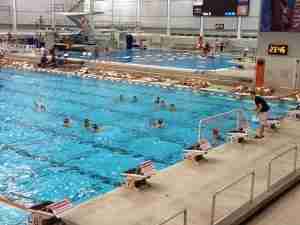
- The Avery Aquatic Center at Stanford is the kind of setting at which all NCAA championship tournaments should be played. The game is now mature enough to demand it. The days of insufficient, uncomfortable deck-level seating should be over, and with world-class stadium style facilities available or soon-to-be it’s not too much to ask.
- More from the respected international coach with whom we spoke after the title match: Malkis saved Pacific by stuffing several close range opportunities. Mace Rapsey was key to USC’s success and the Trojans were effective in making up for his diminished role due to injury. USC’s Vavic was “magnificent.” Pacific center Alex Obert is “better” than teammate Goran Tomasevic and capable of doing much more than playing center, and the Tigers were wise to use him more in the tournament than was done during the regular season.
- Coach Vavic clearly instructed his defenders to hold up Pacific’s centers as they countered from the backcourt and it largely succeeded, even producing an ejection on Tomasevich who was comically blocked by a swerving Trojan on one possession, and often actually held with two hands on the shoulders. Several years ago referees were instructed to let much of this kind of thing go as it was immaterial to the state of play in the front court. And they did so studiously on Sunday. But it’s become more than a nuisance, and definitely had an effect on Pacific’s talented center-forward duo (not that the Tigers would’ve won, fans).
- Collegiate water polo has had a very good year with a women’s championship that went down in the record books with a five overtime win by USC, and Sunday’s brilliant men’s final.