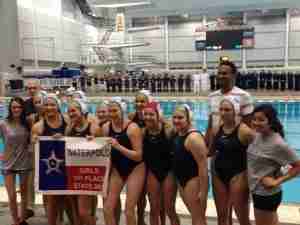
• Some of the iconic water polo schools in San Diego are gathering in La Jolla tonight for the CIF San Diego Section Division III girls’ water polo semifinals. This could be the last year that The Bishop’s School, Coronado, Cathedral Catholic, and La Jolla will wear the Division III tag as the section will create an Open division next academic year. All four of those powerhouses seem likely to join the eight-team Open division in 2014. Semifinal matches for Divisions I and II will follow on Wednesday and Thursday night, followed by Saturday’s finals also at the Coggan Center in La Jolla.
  • Ninety minutes north in Irvine, one of the great girls’ prep water polo spectacles takes place on Wednesday. All seven divisions of the CIF Southern Section will play semifinal matches tomorrow, but the top three will take place at the Woollett Aquatics Center. (OCVarsity.com’s Dan Albano previews Wednesday’s matchups). Top ranked Santa Barbara takes on Newport Harbor, while Foothill and Corona del Mar clash in the D-1 matches. Those games will be streamed livein high definition by media newcomer Go Live Polo, a new venture led by former Concordia University and current Orange Lutheran head coach Steve Carrera, and his partner Robin Cardin, former Long Beach State poloist. The two recently staged a well received exhibition between a group of California high school all-stars and the Argentina senior men’s team. They got word only last Thursday that the CIF would use their firm’s production services for Wednesday’s matches. Fox Sports West holds the rights to broadcast CIF playoffs and deferred to Go Live just days ago. Carerra and USA Water Polo communications guru Greg Mescall will call the games.
  • Some interesting observations about water polo in the US from a former Italian first division player who’s now affiliated with the Georgia Tech water polo club. Ph.D. candidate Viviana Castagna tells the Italian site Spreading Waterpolo that the “UK and USA share very similar problems in terms of waterpolo played at [the] national level.” Primarily money, she notes, observing that collegiate club teams pay for their own tournaments. “…the club teams are actually few, and they are moslty [sic] made by a mix of boys and girls, or some of them are gay teams… There isn’t a proper championship, but these teams get to play matches during some tournaments, again, completely sponsored by themselves. And then what brings good quality players in the States are some college teams; …90% of USA national team players come from colleges in the state of California, which is the only good quality source of waterpolo here.” Why then the relatively high level of success among US Olympic teams? “Maybe the fact that there isn’t a very good national championship allows the players to focus just on the national team,” she speculates. Castagna’s academic and water polo backgrounds are extremely impressive. But we suspect that Spreading Waterpolo’s audience is no better educated about water polo in the US after this analysis than it was before.